Shortly after moving to the town where we now live I met a lady who is also an Autism parent. We chatted several times and during one conversation I told her I was struggling with PECS (Picture Exchange Communication System) because I could never find the right picture when I needed it. Bethany was still very nonverbal and we had a lot of pictures. I couldn’t figure out how to organise them.
“Velcro.” She said. “Velcro strips on the wall and Velcro dots on the back of each picture.” I was amazed. What a great idea! I took her advice and ordered a load of velcro and by the end of the week I had a system that actually worked.
We used those pictures for now and next boards, to help Bethany understand what to expect. Eventually she began to bring us pictures to tell us what she needed or wanted. We would say the word in the picture and eventually she started to say the words too.
I looked at my PECS last week and realised it has been a long time since we have used it. Our daughter is now a functional verbal communicator! She is still unable to carry on a “regular conversation” and sometimes she is hard to understand, but she has functional speech and we are so thankful.
Tonight John took down the pictures and the velcro. It’s no longer needed. I’m so proud of my girl.
Today I am feeling both overwhelmed & grateful (a concept written about by Jillian Benfield).
We’ve just been to a day of hospital appointments with our youngest child. I am feeling grateful for all the progress and development we have seen in her speech and language.
I felt pure joy watching and listening to her session with the cleft SALT. Watching her follow instructions and sit still without fear during X-rays and a CT scan was incredible. Witnessing her sit in the dentist chair and allow strangers to inspect her teeth without melting down was a testament to her progress.She has come so far and I am very grateful.
AND I am also overwhelmed. It is heavy knowing the road ahead. A road of orthodontic treatment and at least two major surgeries to come, all for a child who has limited understanding due to Autism as well as extreme sensory sensitivities.
I knew this was coming at some point. There was wishful thinking that her case would be simple, but truly as the one who brushes her teeth regularly, I knew it wouldn’t be simple. Her top teeth are extremely messed up by the bilateral cleft she was born with. She had two major surgeries before the age of one and then we got on with life.
Until now. Now we’ve had the “phase two” consultation it’s all feeling incredibly close and heavy. I am not looking forward to these procedures or having to explain them to Bethany.
And yet, I am grateful for the NHS and an incredible team of cleft professionals. I know she will get good care.
When you parent a child with a severe communication disorder, you ask yourself a lot of questions:
What caused this? Will she ever talk? Will it always be this way? Why is her behaviour so challenging today? Is she feeling okay? Did someone hurt her? How can I help her? When will she speak?
You buy PECS cards and visual schedule boards, attend SALT workshops, consider buying tech devices to help with communication, and maybe even learn Makaton or another sign language.
You spend hours researching online, worrying out loud with your spouse, and perhaps you pray. You pray for a word. A single word. And when you hear her say it, you rejoice, because maybe she’s already six years old and only just speaking her first word!
Then you pray for a short phrase. You long for it. Verbal communication. And one day she jumps on daddy in bed, shouting, “wake up wake up!” Maybe you cuddle at night and tell her you love her, then hear “I wuv you,” in reply. Your heart bursts with joy.
You pray for yes and no, for please and thank you, and eventually the words come. “No” was much easier for Beth. No was her favourite word for a long time, as she tried everything to avoid the things we needed her to do. But just lately, when she’s in a happy and well-regulated state, I’ve noticed her saying “yes, mama” quite often; tear-jerking for this mama.
Encouraged by the progress, you start to wonder if she will ever ask a question. Then one day she says, “daddy, are you okay? What’s wrong?”
This girl continues to surprise and delight us. One day, she will come home and tell me how her day at school went. One day, she will be able to tell me what activities she did and who she played with.
Until then, I rely on her teachers to communicate through the app. I rely on others to keep her safe throughout the school day. And I pray. She has come so far. What will she surprise us with next?
Original writing by Jennifer Johnson ~ Dedicated to Bethany
One of my favourite things about Bethany is that she doesn’t care what anybody thinks. She is her own person and her own unique personality.
She had a day off school today (teacher training day) and decided to dress for Christmas. So Christmas in July it is! She scooted around the lake as fast as she could while I ran after her, and then she had an ice-cream for a treat.
She wanted to try and use the skateboard ramp for her scooter, but it was too steep. We briefly went to the park before she was off on her scooter again!
Bethany loves her scooter. She loves going fast on her scooter or her bike. She hasn’t quite figured out how to use the brakes yet though. Hence we are killing shoe rubber very quickly. Her new trainers already have rubber missing from the toe!
She’s now playing with Lego while I chill for a few minutes.
Lucy was a bit worried when we took her to school on our way to the lake. She didn’t want Bethany to wear the Christmas outfit. “What if the other children laugh at her, mummy?”
I said, “so what?” Let Bethany be Bethany. She’s cute. She loves Christmas. Even in July. And that’s okay.
Young carers learn a lot from their experiences. They learn how to help their parents. They learn how to distract their siblings in difficult moments. Sometimes, they just know what to do.
Below is a story about something that happened several months ago, possibly even last year. I have been meaning to blog about it for a while so here goes!
Lucy and I were waiting in the pharmacy to collect medication. I was tired and the queue moved slowly. Everyone in front of us seemed to have a problem to solve. Some more people had followed us in and the queue was long.
The door opened again and a young woman walked in with a small girl who looked about four years old. I saw the mum sigh and her eyes roll upwards as she realised how long the queue was.
The little girl was very lively. She began exploring the shelves of the pharmacy as young children do. She seemed oblivious to her mother who was telling her to leave things alone and encouraging her to go and sit down in the waiting area. The girl was in a world of her own, similar to the way Bethany used to be.
The little girl noticed a gap under the counter between shelves and surged towards it. She sat down and squeezed in. The mum looked mortified as she went over to try and extract her. Redirect, distract, redirect. The mum was working hard to try and contain her child whilst the queue just kept growing. I could see her becoming increasingly frustrated which was understandable.
I tried not to stare as my mind wandered back a few years to another pharmacy in another town. It was during the Pandemic when we were required to queue two metres apart. My autistic daughter was about four years old and we were queueing to collect my prescription. She was having a hard time waiting in the queue and I was having a hard time managing her.
That particular pharmacy had just had a refit. They didn’t have a physical barrier to keep customers from going behind the counter. It was just an “understood” rule. Except Bethany didn’t understand. On that day, I was the mum whose “naughty” child ran behind the counter and didn’t listen to her mum while people in the queue stared and silently judged.
Except my child wasn’t being naughty. She is autistic. She just didn’t understand the social rules. She was curious and exploring the store. She was and still is extremely active. I was so embarrassed, frustrated and overwhelmed. After that day I was determined not to take Bethany to the pharmacy again until she was capable of waiting and following “the rules.”
I stirred from my memory and looked over at the mum, trying to communicate compassion and understanding with my eyes as her daughter continued busily exploring the pharmacy. I wondered how I could help. Then my daughter made me proud.
Lucy walked over to the little girl and started talking to her, making friends with her. She knew from experience with Bethany that the other child just needed a distraction. I saw the mum relax a little and smile.
The girls went over to the waiting area and continued talking. They exchanged names, ages, talked about school and so on.
I was proud. My daughter was helping a stranger out. She saw a mum who needed help and knew how to help her.
It was finally my turn to collect my prescription. As I took my turn I could hear the children still talking by the waiting area. I smiled, pleased that Lucy had the confidence to make friends with strangers.
The queue was moving quicker now. I could see the young woman relaxing a bit. I told Lucy it was time to say goodbye and smiled at the small girl. As we walked out her mum caught my eye and mouthed the words, “thank you” to me. I smiled and nodded.
But really, I didn’t do anything at all to help. It was all Lucy, a young carer, who knew how to help a struggling mum with a challenging situation. Well done, Lucy!
For some reason Bethany has never used her index finger to point. She will either gesture with her whole hand or she will point with her middle finger.
Yes, you read that correctly. My seven year old daughter uses “the birdie” gesture to point at things. It happened again today. She asked for an apple as she gave “the birdie” gesture towards the fruit bowl on top of the fridge.
I gently reminded her to use her index finger to point. I don’t want her pointing with her middle finger. But she doesn’t understand.
She will probably continue to do this into her teens. What if I’m not there to explain?
Google AI defines giving the birdie as “a slang expression that refers to giving someone the middle finger, which is a hand gesture that is generally considered offensive and expresses anger or disrespect. It’s a common way to show disapproval or displeasure.”
I fear the day that she tries to point at something and gets misunderstood. The people present may not realise she is autistic and doesn’t comprehend rude gestures. And what if she does it to a police officer or something?
I am sure Bethany is not the only autistic person to gesture in a way that can be easily misunderstood, just because of the world that we live in. If only there were no rude gestures! If only I could explain it better. If only she understood!
So I’m telling people now: don’t assume the worst of people. Give people some grace when they upset you. They may have no idea that they did or said something that caused offence. They may be completely oblivious.
So I’m writing this for the record. Please don’t be offended if my daughter gives you “the birdie.” I can assure you, she didn’t mean any offence.
Gestures mean different things in different cultures too. We have to be careful when we travel to other places, lest we accidentally offend others.
This child of mine, Who does not speak except occasionally when she wishes, And even then, her speech is basic or unclear, Babble interspersed with occasional bursts of clarity, She is non-verbal or pre-verbal or somewhere in-between.
This child of mine, She is autistic and yet she is so much more, She adores princesses and dresses, colour and laughter, and chocolate cake, Family celebrations mean the world to her, Although she gets overwhelmed and hides under the table.
This child of mine, So full of energy, excitement, frantic frustration, and fiercely loyal love! Running, climbing, splashing, and chasing the birds even into danger, She is resolutely determined about her plans, Which can be a good thing but also at times risky, She sees only one way.
This child of mine, Who adores music and loves to dance, How is it possible that she can sing much more than she can speak? Her melodies mostly pitch-perfect, although the words are blurred, Decipherable only to those who know her well. I think she will be a musician.
This child of mine, I wonder, does she think in words that she can’t express? Or does she just choose not to say them? Does she see the world, her desires, needs, and dreams as pictures? We have pictures for everything in our house, Stuck to Velcro strips on the dining room wall, Our picture exchange communication system.
This child of mine, Fruit of my womb whom I have fed and cared for all the days of her life, Watching and waiting for her delayed milestones, I know her so well, and yet in many ways she is still a mystery to me, Locked inside her mind, Struggling to make sense of all that puzzles and overwhelms her.
This child of mine, She is beginning to break open those locks, I dare to hope and dream, I prepare myself for disappointment, Will she ever say mum?
Originally written by Jennifer Johnson, October 2023
In March 2018, Bethany had cleft lip surgery on her bi-lateral cleft. Four months later she had palate surgery. Her cleft palate was extremely wide and it was a difficult operation. The recovery was awful, including a readmission to hospital due to Bethany’s unwillingness to feed. It took a while for her to recover.
Emotionally it took me and John some time to recover as well. But we did. We thought our special needs parenting days were over and we could move on with life. Bethany would be fine now and hit all of her milestones, with maybe a 3-6 month delay due to the surgeries.
We were naive. We were wrong.
Nobody expects to have a child with special needs. Nobody plans on their child being autistic or whatever…. Disability is something that happens to other families, not your own. But when it does happen, after the shock and the grief wear off, I’m here to tell you that there is joy.
There is joy and excitement with every small step of progress and every tiny achievement. There is joy in every smile and every single word. There is joy and love and value in having family relationships with people who although limited in some respects, are still innately valuable and beautiful and worthy of love and support.
So, if you’re new to disability parenting, let me encourage you. I know there will be hard days and hard weeks. You may need time and space to grieve the unexpected change of course. But hang in there. And look for the tiny moments of joy and progress. Read all you can about the disability you’re supporting with, and let the stories of parents who have gone before you be your survival guide.
If you know Bethany, you know she basically has two moods. Extremely happy (and hyperactive with that) or extremely grumpy (refusing to do as asked and hiding away on her own, stamping her feet, or slamming doors). Most people only see Bethany’s happy side because she loves visitors, teachers, friends, and strangers, but truth be told, her behaviour can be extremely volatile.
Yesterday we were riding with my sister’s family to church because our car is being repaired. I sat by Bethany. “Are you happy today, Bethany?” I asked. “No,” she replied. “Are you sad?” I asked. She shook her head and said one word: “Grumpy.”
I marvelled.
I have never heard her use that word before. But when she is acting grumpy I generally tell her she is being grumpy. She has evidently taken that word, remembered it, understood it, and now has used that word for the first time ever (and in the correct context).
Bethany was grumpy yesterday morning. She was refusing to come and get her shoes on to go to church. It was only when I said we were riding with Auntie Amy that she came willingly. She even ran happily up the hill to Auntie’s driveway. She really loves her Auntie. But she was honest with me in the car when I asked how she was feeling.
Grumpy. Just one word which conveys a lot of meaning.
With this girl, one word means everything. She is learning to communicate how she feels with words. And that makes me happy, even if she is feeling grumpy.
Just two and a half years ago, Bethany was what I would describe as completely non-verbal. She had very few words and could not say mummy or daddy. She couldn’t ask for a drink. She couldn’t ask for something to eat. She couldn’t tell me if she wanted to do something or go somewhere. She couldn’t tell me she felt sick. She couldn’t tell me if something hurt on her body, or whether someone had hurt her. She couldn’t say yes or no.
Bethany was unable to communicate verbally except through screaming or crying. Her behaviour was baby-like when she was four and five years old. There were many tantrums due to the communication problems.
Bethany has progressed significantly since those days. She can now request a drink or specific items of food. She will ask for a bowl if she wants cereal. She will let me know if she wants the toilet or to go swimming. She can say “ouch” but not necessarily tell me what hurts. She can ask for a hug or for her tablet.
Beth can also copy phrases that she hears us say or things she has heard on TV shows. The problem with this is that she is just echoing things she likes the sound of. She doesn’t always understand what she is saying. This behaviour is echolalia and is common among Gestalt language learners. She can now say “yes” although she normally chooses to say “no.” In fact, she often says “no” when she means yes. This is frustrating for us at times.
The early days were difficult. There was lots of challenging behaviour. The behaviour was the symptom of the communication problems she was experiencing. It was hard to be patient and to constantly play the detective. We were always trying to figure out whether she was hungry, thirsty, hurt, sick, tired, dirty, overwhelmed…. You get the picture. In Autism circles, they call it iceberg theory. The behaviour you see is the iceberg. The causes are under the surface.
As Bethany developed, she became adept at pulling us places to try and show us what she wanted. She eventually learned to gesture and to point (often with her middle finger unfortunately). But it was still difficult to figure out what she was wanting at times.
We bought “now and next” boards and picture cards, so we could have visual schedules to let her know the plan. Sometimes she ran to us with a picture of what she wanted. We used words with the pictures to help her learn. We used physical object references to help her understand the names of the objects. We played Yakka Dee on repeat on BBC iPlayer. We tried to keep our language as simple as possible. At school they used pictures, symbols, Makaton, and speech. I became aware that some gestures Bethany was using at home were Makaton signs. I signed up for a basic Makaton course.
Just over a year ago, Bethany started to say mummy. She was six years old. It was special to me to finally hear it. Last summer she started to say daddy. My husband was beginning to think it would never happen. She can say “Lucy” but seems to have given Lucy the nickname “Shula” instead.
With the increase in Bethany’s verbal abilities, the behavioural meltdowns have reduced significantly. They still happen sometimes, but far less frequently, and sometimes just because we have said “no” to her about something. She can be extremely stroppy when she does not get her way.
We are pleased that Bethany is now able to communicate to a basic standard, but I wonder if she will ever be able to tell me that her throat is sore or that her joints are aching. I wonder if she will ever be able to answer questions or tell us about her day at school.
I wonder if she will ever manage to have a normal conversation or discussion. Will she be able to discuss history or science? Will she ever have political or religious opinions and be able to voice them? Will she ever be able to explain if anyone does anything inappropriate to her? Will she communicate above a basic standard of needs and wants?
I don’t know the answers to these questions. I could choose to live in fear of the answers to these questions.
But I do not choose fear. I choose to hope.
This girl, Bethany, has come so far! And she is a determined girl. I refuse to limit her. May she fulfil all her potential!
On the evening of Monday, 11th November, a seventeen-year-old girl was arrested, handcuffed, and put in the back of a police car. There were two officers present, and one sat with her in the back. At some point in the journey, the driver pulled the car over onto the hard shoulder of the M5 motorway, something which should only happen in an emergency. Somehow, the girl, handcuffed, managed to escape the back seat of the car, then ran across the motorway carriageway, climbed over the barrier, and was tragically hit by a car and killed on the other side. Yesterday I read that the girl was autistic.
Questions flooded my mind: Why did the car pull over? Why did the girl run? Why weren’t the security locks in the back of the car switched on? Why was the girl arrested? Was she lost? Did someone try to take advantage of her? Was she scared? These are obviously matters for the police to investigate. Apparently correct procedures may not have been followed and the police force involved have referred themselves to The Independent Office for Police Conduct (IOPC).
I don’t know the answers to these questions, but I have an autistic child and an imagination that works overtime, which can be exhausting and emotionally draining.
I ponder:
A seventeen-year-old girl on a night out. She doesn’t “look” autistic. (What does an autistic person look like anyway?) Something happens on the night out which upsets her. She doesn’t respond calmly. There’s a disturbance while she melts down. She is angry. She is dysregulated. She has lost control of her ability to reason. She needs someone to co-regulate and support her, to help her calm down. The police run in. They see only disorder and aggression. They arrest her with force, causing her to melt down further. They cuff her and shove her in the back of a car. One of them sits next to her.
She is scared.
She is overwhelmed.
She has no familiar adult with her. Maybe she wants her mum.
She is still dysregulated.
Maybe they shout at her to calm down.
One officer starts driving. Where are they taking her? What’s happening? She doesn’t know. She doesn’t understand.
She panics and melts down further.
It’s fight or flight. She is not in control.
Maybe she becomes aggressive with the officer in the back. Maybe that’s why the car is pulled over.
The car stops.
Fight or flight.
She tries the door. It’s open. She runs, still handcuffed, terrified, with all her mental faculties impaired by panic.
It didn’t end well.
It rarely does.
I’ve seen enough TV documentaries and dramas to know how the police treat “criminals” when they arrest them. They tend to fight force with force.
But perhaps this girl wasn’t a criminal. Perhaps she was just a teenage girl arrested for a misdemeanour. Perhaps she was just an autistic child arrested for having an autistic meltdown.
My heart is scared. This could be my daughter in ten years.
The police have got to do better. The world has got to do better. We must learn how to deal with people in a way that doesn’t exacerbate the situation. We need less bulls in china shops and more training and understanding about how to calm people down and defuse emotionally charged circumstances.
I realise I’m just speculating and imagining the possibilities. But you can see how the situation may have developed.
I am sad for this girl. I grieve for her parents and any siblings. What a tragic loss of life!
I hope there is a thorough investigation. I hope that sincere apologies are made. I hope there is better training in the police force as a result. I hope for a change in culture in the way disabled people are treated in these situations. I hope. And I pray.
I sat in the cafe with my friend, a fellow Autism mum whom I had met through a SALT workshop at my daughter’s school. For almost two hours we had been catching up, drinking tea, and talking all about faith, parenting, and different approaches we were trying with our autistic children. Then she stopped and asked me, “how is Lucy doing?” Lucy is my older child. I told her she was doing okay, but her relationship with Bethany has its challenges at times, because of Bethany’s physicality. Beth plays rough— more like a rugby player than a seven-year-old girl!
I’m not sure how the conversation got there, but I found myself telling my friend about the time when my obstetrician offered me an abortion because she was concerned about Lucy’s head size; she thought it was possible the baby may have Down Syndrome. At the time of this conversation, I was approaching full-term and was completely horrified at the suggestion of a termination. I had been talking to my baby and feeling her kicks for weeks. We had named her already. I responded more calmly than I felt inside, telling the doctor that our child was wanted and loved no matter what. We were keeping our baby. My heart filled with sorrow at the thought of other babies having their lives cut short due to a fear of parenting a disabled child. Lucy arrived and although she had some complications after she was born, she is now a healthy and thriving nine-year-old.
A few years later, I found myself having a similar conversation with another doctor. We were discussing our second child’s cleft lip and palate which had been diagnosed via ultrasound. The offer was framed slightly differently, as the excellent care available to cleft babies was emphasized, but abortion was still mentioned as an option if we didn’t wish to continue with the pregnancy.
As a child and a young adult, I knew two people with Down Syndrome. They were some of the kindest and emotionally “in tune” people I have ever met. They had hobbies, things they enjoyed, and families they loved and who loved them. They were cared for and valued despite their disabilities.
Valerie and I left the café and began walking through the garden centre. I stopped for a moment. “Can you imagine if they ever came up with a pregnancy screening test for Autism?” We looked at each other in horror as we thought about the implications of that. How many autistic lives would end before they were even born if a screening test was developed?
We harp on and on about disability rights, children’s rights, and equal rights in our society, but the law only applies those rights to people after they are born? As a Christian, I believe that human life is sacred; created in the image of God. I believe that human life begins in the womb.
According to UK law, abortions are legal up to 24 weeks. However, they are legal under certain circumstances up to birth. These circumstances include a severe foetal abnormality (which apparently includes a cleft lip). If we ascribe equal value to disabled individuals in comparison with non-disabled, why is the law on abortion different? As parents, our job is to protect and love our children no matter what. Surely this protection and love should begin as soon as we discover the pregnancy, regardless of whether the baby has a disability.
We have a tendency in our society to value people based on what they can bring to the table. We value those with great intellect and creativity. We value those who are skilled at building and fixing things. We value those who excel in sports. We value those who have financial acumen and bring wealth to the nation. We value artists and musicians. The government values those who pay taxes; those who are seen to contribute to our country’s prosperity.
However, I believe we all contribute something to our community and our country, whether it be economically or otherwise. We all have roles to play which are important regardless of whether they are financially lucrative for the nation: Stay at home mothers, unpaid carers, disabled people, volunteer workers, the elderly, children and babies are all valuable and have a place in our society. No one should be screened out because of age or disability. We all have a responsibility to take care of one another. I have written before that parenting an autistic child has made me a better mother and a less judgmental and more compassionate person. I would have missed out on that growth as a person had Bethany never been born.
As Lin-Manuel Miranda, a songwriter for the popular Disney movie, Encanto wrote:
“I think it’s time you learn, You’re more than just your gift… The miracle is not some magic that you’ve got, The miracle is you, not some gift, just you, The miracle is you, All of you, all of you….”
The truth is that every person has value. We all bring something to the table. We all have something to offer society—even those with disabilities. Society benefits when we value those who are less able or frailer than we are. We are a better society when we compassionately and selflessly care for one another.
Continuing my conversation with Valerie, I told her, “I would do it all again. Despite all the challenges and stress of special needs parenting, I would do it all again. I wouldn’t be without Bethany.” She heartily agreed with me, saying the same about her own autistic son.
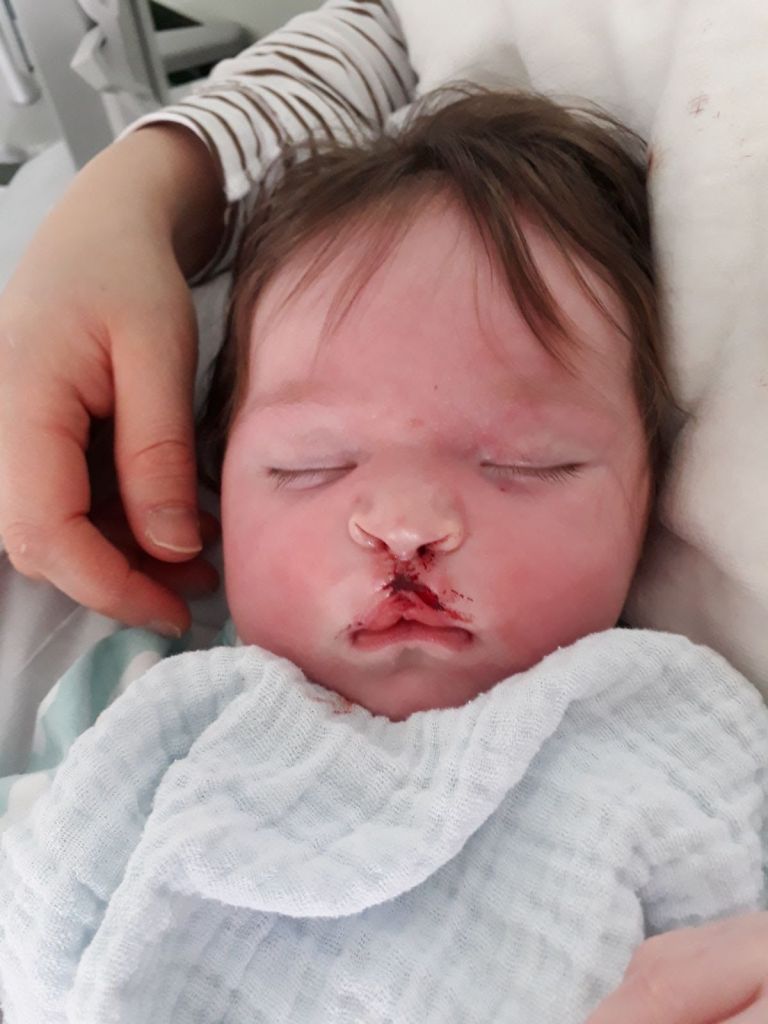
Photo of my daughter after she was born with bi-lateral cleft lip and palate.
Most people expect to have children. We expect that those children will hit certain milestones at certain times. We expect them to roll over by six months, crawl by a year, walk by eighteen months, be talking by age two, and be fully potty-trained by age four. But what if they don’t meet those milestones?
I never expected to give birth to a child who had cleft lip and palate. I didn’t expect her to have Autistic Spectrum Disorder. And I certainly didn’t expect that I would still be toilet-training her at the age of almost seven years old. And yet here we are. The Spark for Autism website states that “Among 4- to 5-year-olds, 49 percent of autistic children were not toilet-trained, compared with 24 percent of children with developmental delay. By comparison, only 8 percent of typically developing children in that age range were not toilet trained” Spark referenced to a 2022 study which can be found here: https://pubmed.ncbi.nlm.nih.gov/35170572/
There is unfortunately ignorance about this struggle to toilet-train even within the Education sector. I am fortunate that my daughter attends Special School where the staff are aware of all the difficulties that Autistic children have to overcome, but I have a friend whose six-year-old son is in mainstream school but isn’t yet toilet-trained. His teacher doesn’t seem to understand why, and my friend feels a lot of pressure just to get him trained. “If only it was that simple,” she said to me almost in tears. I understood, because it’s a struggle I have experienced.
What are the reasons that autistic children struggle with toilet training? One reason is that autistic people experience an intense “desire for sameness” as well as anxiety around new things. The child is used to wearing nappies. They are used to continuing playing while they do their business in a nappy. It’s comfortable to them and normal. Learning new routines and new ways of doing things causes them intense anxiety, resulting in significant behavioural issues to be managed during the training process.
This was the issue with my daughter. She knew what needed to be done, and she was aware of her bodily functions, but I couldn’t force her to use the toilet until she was ready. She used to slam down the toilet lid and make vehement noises in protest while stomping her feet. She was not going to progress until she felt emotionally ready. She was essentially clinging to toddlerhood, because that’s what she knew. That was what she felt comfortable with. Thankfully she is now making significant progress towards being fully-trained, but that progress only came when she was willing to cooperate with the process.
Another reason autistic children struggle to toilet-train is because of sensory issues they have around using the toilet. They may not like the sound of the flush, the brightness of the light in the bathroom, the feel of the toilet seat, or even the physical act of toileting on a toilet. They may have extreme fear of falling into the toilet. They may have a fear of “different” toilets leading them to use the toilet at home but not at school, or completely refusing to use public toilets.
Sometimes there is a medical reason autistic children struggle with toilet-training. According to the Mayo Clinic “children with autism spectrum disorder (ASD) tend to have more medical issues, including gastrointestinal (GI) symptoms such as abdominal pain, constipation and diarrhea, compared with their peers.” (Autism spectrum disorder and digestive symptoms – Mayo Clinic) Processing these challenges from a sensory perspective is hard for these children, let alone adding the pressure of learning a new skill to the mix.
Sometimes the child is completely unaware or unaffected by their bodily cues. They don’t understand that they need “to go,” or they don’t mind being in a damp or soiled nappy. It just doesn’t affect them.
Communication problems are a significant feature of Autism. Autistic people often struggle to understand language and they often struggle to express themselves in language. Many are not be able to express that they need to use the toilet, and don’t understand the routines they are expected to follow in the bathroom. Visual aids with pictures of routines and PECS (Picture Exchange Communication System) can be very helpful in these situations.
If you have a two-year-old who is already using the potty, or a child who was toilet-trained by the age of four that’s fantastic. But count yourself fortunate. And when you hear of a six or seven-year-old who’s still in nappies, please don’t judge, or assume the parent is incompetent. The chances are, that parent has other children they’ve managed to toilet-train! Parents of children with special needs are desperate for support and encouragement, not judgment. We are honestly doing the best we can to help our children with significant difficulties.
When Bethany was two years old, we knew nothing about what I now refer to as the Autism Cha Cha. We saw very few steps forward. It was like Bethany developed to the age of nearly two and then just stopped hitting milestones. We couldn’t engage her with books, or even toys. She couldn’t talk and we could barely get her to respond to us when talking to her. If we did have eye contact we could get her to smile, or sometimes babble or giggle; but getting her to make eye contact was a struggle. The only things that really seemed to engage her fully were music, video, and physical activities such as soft play, the park and puddle jumping.
Bethany was born with cleft lip and palate, so we were getting lots of advice from the Cleft Speech and Language Therapist about ways of engaging her focus and attention that we might model to her how to say different sounds and words. Nothing seemed to get her attention for more than a second..
Bethany’s behaviour deteriorated as she struggled to communicate with us, and we struggled to understand her. Sensory information overwhelmed her ability to process that information as Bethany fought against all the necessary daily rituals of teeth brushing, hair brushing, washing, and eating. At that point it felt like we were going backwards, never mind forwards. She spent her days watching Disney princesses on TV, scattering toys everywhere (but not playing with them), and lining up stickle-brick people on the table.
I didn’t understand what was going on. I didn’t know about Iceberg Theory. I didn’t think about behaviour being communication. I was out of my depth and had no idea how to parent my wild child. I started seeking help from professionals and googling Bethany’s symptoms and behaviours. I finally realised that my child was probably Autistic.
We eventually started getting advice and support. I attended some online workshops and a longer online course by the National Autistic Society. Bethany started attending some day-care play sessions, to give her some play therapy and social interaction. I got a much-needed break. Slowly, we began as a family to make progress.
However, with Autism, you can often take a step forward and then regress a step or two backwards. It’s sort of like a Cha Cha. Just when we start to feel like we’ve figured Bethany out and we’ve got this Autism thing covered, a sudden regression happens to keep us humble. Illness, a change in routine, a new situation: these things can all be difficult for autistic people to handle and sometimes cause a regression.
In the early days there was no progress; then with support and training we started to feel like we were making some progress followed by some regressions. Maybe it was one step forward and one step back. In the past year or two, Bethany has made huge strides in her development. Her “Cha Cha” has been more like two steps forward, one step back and repeat; but the overall trajectory has been forward motion.
It’s not a case though of progress towards becoming neurotypical. Bethany is always going to be Autistic. As her parents we want her to progress towards being able to cope with things that happen daily in our neurotypical world. We want her to be thriving, rather than barely surviving. We don’t want her to live her life shut away from the world, but rather we want her to experience the good things in life. We want her to feel supported and happy even when life at times is a lot harder for her because of her disorder. We want her to be flexible enough to cope with real life changes that she will have no control over. Above all, we want her to be able to communicate her needs, whether by using Makaton, pictures, a technological device, or even hopefully by talking.
As a parent, there is a lot of joy in seeing your children grow up and meeting their milestones. Crawling, the first word, talking, standing, walking, starting school, learning to read, doing sums, making “best” friends, moving up to High School, passing exams, finishing school, driving a car, attending college or university, dating, getting married, having children of their own. For Bethany and many other children with special needs, some of these milestones will never be reached. But we can jolly well celebrate the milestones we do see!
This past week, Bethany started saying, “I coming,” when we call her name. How wonderful that she is responding to her name! Last weekend she figured out how to pedal her bike properly. She regularly sings pitch perfect although the individual words are unclear. She knows her alphabet. She displays aggressive affection through tight squeezing hugs and repeated kisses. She can ask for a drink or food. She can let me know she needs help with her personal hygiene needs. She often say “ank you” (thank you).
Bethany is sometimes able to let me know she feels unwell, by saying “owie” and pointing perhaps to her ear. She moved up a class at Easter due to the progress made since September. On Friday I took her to Tesco, and she coped with me doing a small top-up shop; without running away or lying down on the floor. These are milestones for her. It is a joy to witness them. It’s a joy to see her happy and thriving.
On Friday afternoon Bethany returned home from school with a certificate for “always being so determined in all her focused tasks.” This certificate made me smile. It nearly made me cry. It was an answer to prayer.
That certificate flooded my brain with memories of Bethany and her determined behaviours all through toddlerhood to now at just over 6.5 years old:
The child who I had to strap into her booster seat in order to brush her teeth and hair.
The child who thrashed about and screamed while I endeavored to brush as gently as possible.
The tornado who spun away from me or arched her back when she didn’t want to be held.
The child who seemed to have superhuman strength to wriggle free when I was holding her to keep her safe.
The child who kicked and writhed through nappy changes and ran away butt naked because she didn’t want to wear a nappy.
The child who fought hair washing with all her might.
The child who lay down on the floor and refused to move during walks and in shops when she’d had enough.
The child who slammed the toilet lid down repeatedly when she refused to toilet train.
My wild child.
My determined child.
The child I could never reason with.
She sees only her own way.
Bethany’s autism exacerbates typical childhood behaviours, making her overwhelmingly difficult to handle at times.
My prayer was that this wild determination would one day be channelled. That it could become a good characteristic and not just an overwhelming frustration for her weary parents.
That prayer is being answered. On Friday she brought home a certificate for her determination in her school work.
People who know me personally know that I am a Christian. By using that term, I mean that I have trusted in Jesus Christ as the promised Messiah, born to die on the cross for our sins. I also believe in the resurrection of his body from the tomb and the gift of eternal life He offers to those who trust in Him.
You may wonder if having a child with a disability has caused my faith in God to deteriorate. I mean, if God is God, why did he allow Bethany to be born with a genetic deletion syndrome? Why did he allow her to be born with a cleft lip and palate? Why did he make her autism so severe that she struggles to talk and to understand other’s speech? Why did he cause sensory processing to be so difficult and even painful for her? Is God really there? And if He is there, is He really good?
He is there. He is good.
I won’t say that I’ve never asked any of those questions. And I won’t say that at times I haven’t struggled with trusting God especially in the hardest moments. But I know that these struggles and these questions have brought me to my knees and driven me closer to the only one who can comfort me and help me get through. These struggles have driven me to the Bible and caused me to claim God’s promises over and over again. They have propelled me into the arms of the Father of mercies and the God of all comfort. They have led me to pray and to witness the answers to those prayers.
Can God heal? I believe he can. Jesus healed many who were ill during his earthly ministry (often in the presence of many witnesses). Does God always heal? Not always in this life, but in eternity, yes. He promises that one day, for His redeemed people there will be no more tears and no more pain.
But why is there pain now? This is the philosophical question that many have struggled with through the centuries. We all go through hard times and the natural question is, “why me?”
I think there are solid Bible answers to these questions but it is very hard to summarize them. I will attempt this:
Firstly, we have to remember that good and evil exist. God and Satan exist. There is a battle going on. God is good and Satan is evil, but Satan wants to make God look like the bad guy. Satan deceived Eve in Eden and he persists in deception to this day.
Secondly, when God created the world and everything in it, initially, it was good. He gave only one rule, a rule to protect man from the knowledge of good and evil by telling them not to eat fruit from that tree. Man broke that one rule and sin entered in. Evil entered in. The curse entered in. Things began to decay. Thorns and weeds grew up. Man’s body began to decay. Things began to die. (Romans 8 speaks of all creation groaning under the bondage of sin.)
God had fairly warned Adam and Eve what would happen if they disobeyed Him, but He gave them the gift of free will. They chose to disobey one rule and it had eternal consequences for all of God’s creation. A proliferation of rules became necessary but unfortunately we still choose regularly to disobey.That is why it became necessary for God to send a Saviour (“God so loved he world, that he gave his one and only son, that whoever believes in him should not perish but have eternal life” John 3:16).
Thirdly, some of the trials we go through today are the direct result of our own sinful choices. Some examples of this are; taking drugs leading to mental health and physical health problems, crime leading to prison time, immorality leading to STDs. There is a law of sowing and reaping in this world.
Fourthly, we read in Job that God allowed Satan to test Job to see if Job’s faith in God was real. Would it stand the test? Satan projected that Job only served God because God had blessed him. God knew it wasn’t true and ultimately He used the trials to bring Job into a greater personal relationship with Himself.
We have two choices when we face difficulties. As Job’s wife suggested, we could “curse God and die.” Or we could turn to God in faith and plead for His help and mercy.
I have made my choice. The Lord has helped me in the midst of difficulties and questions. He can help you too.
Psalm 66:12 “You let men ride over our heads; we went through fire and through water; yet you have brought us out to a place of abundance.” (ESV)
Several weeks ago, I was downstairs loading the dishwasher when I heard somewhat of a commotion upstairs. There was movement in the bathroom above me and I could hear the slamming of the toilet seat. I called up the stairs. “Is everything alright up there, Lucy?” A reply came back: “Yes mummy. It’s okay. I just took Bethany to the toilet and changed her nappy.”
“What?”
“I changed her nappy,” Lucy said with a small giggle. Her beaming face appeared at the top of the stairs. “I thought I would do it for you and save you a job.” I smiled back at her. “Aww. You didn’t have to do that, but thank you.”
How should you feel when your eight year old tells you she’s just changed the nappy of her six year old sister? I mean, it’s not really her job is it. It shouldn’t be her job. She should be enjoying her childhood, not changing her sister’s nappy. But she did it, of her own volition, because she is a young carer.
Young carers grow up in a different world to their peers. They experience different pressures within the home environment, and at times they miss out on experiences and activities because their sibling can’t cope in certain situations. I feel bad that Lucy misses out, but yet I am thankful that good things also come from her being a young carer.
As a young carer, Lucy is learning to put other people before herself. She is learning to be a kind helper. She is learning to empathise with the struggles and limitations of others and to appreciate the blessings that many people take for granted.
Last weekend a small fair came to town. John and I carefully considered what to do. We wanted Lucy to have a chance to go to a fair. She hadn’t been to one since our May holiday in 2021. On that day Bethany was strapped into her buggy after a major meltdown and she was oblivious to the fair, but Lucy was able to enjoy a few rides. I suggested that either we all went to the fair, to see if Bethany would cope, or that one of us should take Lucy.
We decided to be brave and see how Bethany would manage with the noise, the excitement, the rides, the queueing, and the turntaking. (Queuing, turntaking, and sharing are all skills she has been learning at special school.) When we told Lucy we were going to the fair, her face lit up. “I can’t believe it,” she squealed excitedly. “I didn’t think we would get to go.”
So, on Saturday after lunch, we walked to the fair. First up, was the aeroplane ride. They seemed to enjoy it and when the ride finished, Bethany understood that her turn was over and got off without any trouble at all! Next, they went on a car ride, which went around in a rectangular circuit, flinging the cars around the corners. We had to wait and queue for that one, but again, Bethany seemed to understand.
Daddy tried to get Bethany and Lucy to share a car, but as soon as Lucy got in, Bethany got out and went to get in her own car. I guess she wanted space! Once again, when the ride finished, Bethany understood her turn was over. (A few years ago, I let her ride a carousel in Reading town centre, and I had a terrible time trying to get her off the ride at the end.)
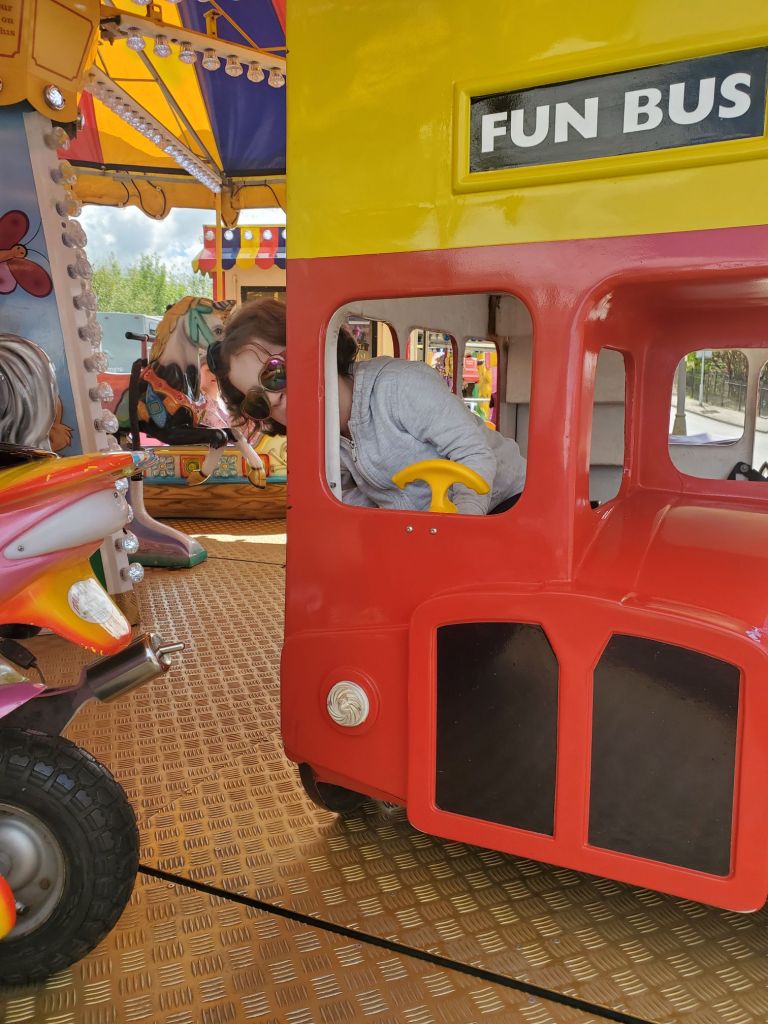
Lucy wanted to ride the carousel next. She’s really into ponies and unicorns at the moment, so she wanted to ride the pony. Bethany, predictably, got into the bus driver’s seat. Once again, at the end of the ride, Bethany understood her turn was over. I couldn’t believe how well things were going.
At the far end of the fair there was a huge inflatable slide. We decided to let them play on that and then leave the fair as we were running out of cash. They climbed the steps to the top and Lucy came sliding down straight away. Bethany stalled at the top. The slide was steeper than it looked and she was scared. She sat at the top for around five minutes, crying out every now and then. I asked if i could go to her, but the ride operator said no because of health and safety. I was annoyed. We asked Lucy to try and encourage Bethany to slide down. Lucy was not successful.
Finally, Bethany psyched herself up, and managed to slide down. Her fear left her and she managed two more turns before their time was up. Once again, she seemed to understand that her turn was over and came to put her shoes back on without any trouble.
Bethany was getting tired now and tearing her away from the fair was difficult. We strapped her in her mobility buggy as she was melting down. Then Lucy reminded me, “give her an apple from your bag, mummy.”
“Great idea, Lucy. I forgot about that!” I handed Bethany an apple and a drink to distract her and she gradually calmed down. We walked to the Rock Park, which is a quiet wooded walking area with a river running through it. The calming sounds of the water below and the birds overhead were a balm in contrast to the noisy fairground. Bethany was calmed and I was feeling grateful.
We just managed a family outing to the fair! Despite autism and the challenges it throws at us, this time, neither of my girls missed out.
Bethany can now queue for a limited time. She understands how to take turns, and share; all skills that she has worked hard to understand and achieve. I am so proud of her.
And Lucy, she’s my little helper. Whether by randomly changing a nappy, tidying up her sister’s toys, or by reminding me of snacks in my bag for a necessary distraction, she’s my helper. She’s a young carer and I am very proud of her.
And thank you John, for taking us through the Rock Park to calm our senses after the noisy fair. You knew exactly what was needed to calm us all down.
I never imagined I would have a child who wouldn’t want to hold my hand. A child who would spin wildly at any form of restraint, be it a hand, a leash attached at the wrist, or a backpack with reins. All little children like to hold their parent’s hand, don’t they?
They don’t.
My eldest daughter, Lucy, has always liked to hold my hand and still does at times, although she is getting older now. When she was younger, we used a wrist leash to train her to stay close on walks when she wasn’t holding hands, but she was always willing to hold hands to cross the street or when walking by the road.
Bethany: my wild child, my independent and determined child; has always resisted restraint of any kind. She loves to run free. She sees no danger. Her wrists and hands are very sensitive to a firm grip. Holding her tighter sends her into sensory overload, which can be very challenging to deal with when out and about with all eyes watching. We tried both the wrist leash and the backpack reins for a while, but they just sent her into a spinning, flapping, screeching frenzy.
Bethany is autistic. The things that come naturally for neurotypical children don’t necessarily come naturally for her. We must creatively find what works for her and be extremely patient. For the most part we use what I call “the shepherding technique.” That means we hover close to her (running if she runs). If I see danger I put my arms around her from behind and hold her close. I point out dangers such as moving vehicles. Where possible, we go on walks in large groups, with aunts, uncles, and cousins as Bethany is more motivated to walk and happier to cooperate in a group. We encourage hand holding for crossing roads and sometimes she will do so.
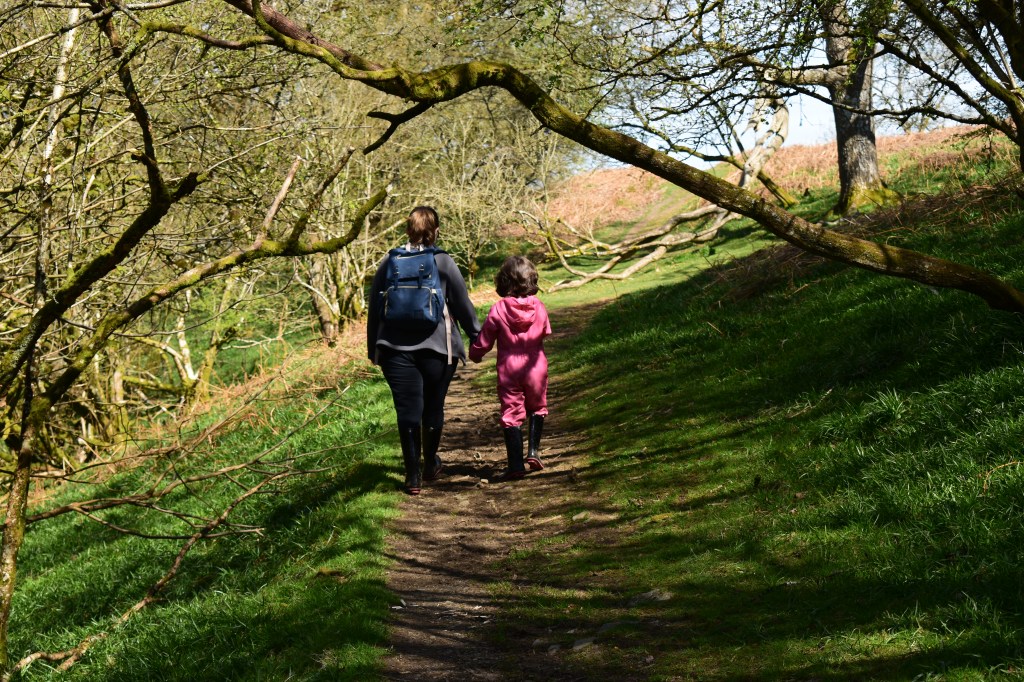
On Saturday we went for a family walk. It was just the four of us out in the countryside away from roads and traffic. We were hunting for bluebells. We didn’t find any as it was still too early for our location, but it was a fine bright day and an enjoyable walk. Bethany chose to hold my hand as we walked uphill through an area wooded with tall pine trees. The hill was steep, and Bethany struggled to carry on, but she held my hand for support and I encouraged her that soon it would not be so steep.
We carried on through a gate into a clear area where last year’s bracken had died back. The sun shone brightly and the birds made their music above us. The path gradually became less steep and then levelled off as we carried on. Still, she held my hand. We found “Happy Valley,” as the locals like to call it, and strolled along for a little while before stopping to give the girls a drink and a snack.
Only a year ago, we walked up the same hill to search for bluebells. A year ago, Bethany found the hill too steep. She cried. She stopped. She refused to walk. She wouldn’t hold hands. In the end, daddy carried her. He was stressed. She was stressed. We were all stressed. We were too late for the best of the bluebells last year and the walk was anything but relaxing.
This year, Bethany walked for the whole time, except when daddy lifted her over a particularly squelchy area of mud. This year, nobody cried. This year, nobody was stressed. We found “Happy Valley,” which was beautifully green but completely bereft of bluebells. We enjoyed the bright blue sky, the bird song, and the sound of the stream gushing along the valley below. It was idyllic. And this year, my heart was singing, because this year, Bethany voluntarily held my hand!
This child of mine, Who does not speak except occasionally when she wishes, And even then, her speech is basic or unclear, Babble interspersed with occasional bursts of clarity, She is non-verbal or pre-verbal or somewhere in-between.
This child of mine, She is autistic and yet she is so much more, She adores princesses and dresses, colour and laughter, and chocolate cake, Family celebrations mean the world to her, Although she gets overwhelmed and hides under the table.
This child of mine, So full of energy, excitement, frantic frustration, and fiercely loyal love! Running, climbing, splashing, and chasing the birds even into danger, She is resolutely determined about her plans, Which can be a good thing but also at times risky, She sees only one way.
This child of mine, Who adores music and loves to dance, How is it possible that she can sing much more than she can speak? Her melodies mostly pitch-perfect, although the words are blurred, Decipherable only to those who know her well. I think she will be a musician.
This child of mine, I wonder, does she think in words that she can’t express? Or does she just choose not to say them? Does she see the world, her desires, needs, and dreams as pictures? We have pictures for everything in our house, Stuck to Velcro strips on the dining room wall, Our picture exchange communication system.
This child of mine, Fruit of my womb whom I have fed and cared for all the days of her life, Watching and waiting for her delayed milestones, I know her so well, and yet in many ways she is still a mystery to me, Locked inside her mind, Struggling to make sense of all that puzzles and overwhelms her.
This child of mine, She is beginning to break open those locks, I dare to hope and dream, I prepare myself for disappointment, Will she ever say mum?
Originally written by Jennifer Johnson, October 2023
The day Bethany was diagnosed with Autistic Spectrum Disorder was a day of great relief. It was a day of validation, to know that professionals saw her need. They saw our difficulties as a family, and they agreed with us. To hear those words after 18 months of being told not to worry and “she’ll catch up,” was strangely quite healing.
I already knew in my heart that Bethany was autistic. Her behaviour made it all too clear to me as her primary caregiver. My husband and I were frequently tearing our hair out, metaphorically speaking, as we tried to manage her challenging behaviour and lack of communication skills, especially while out and about in the community.
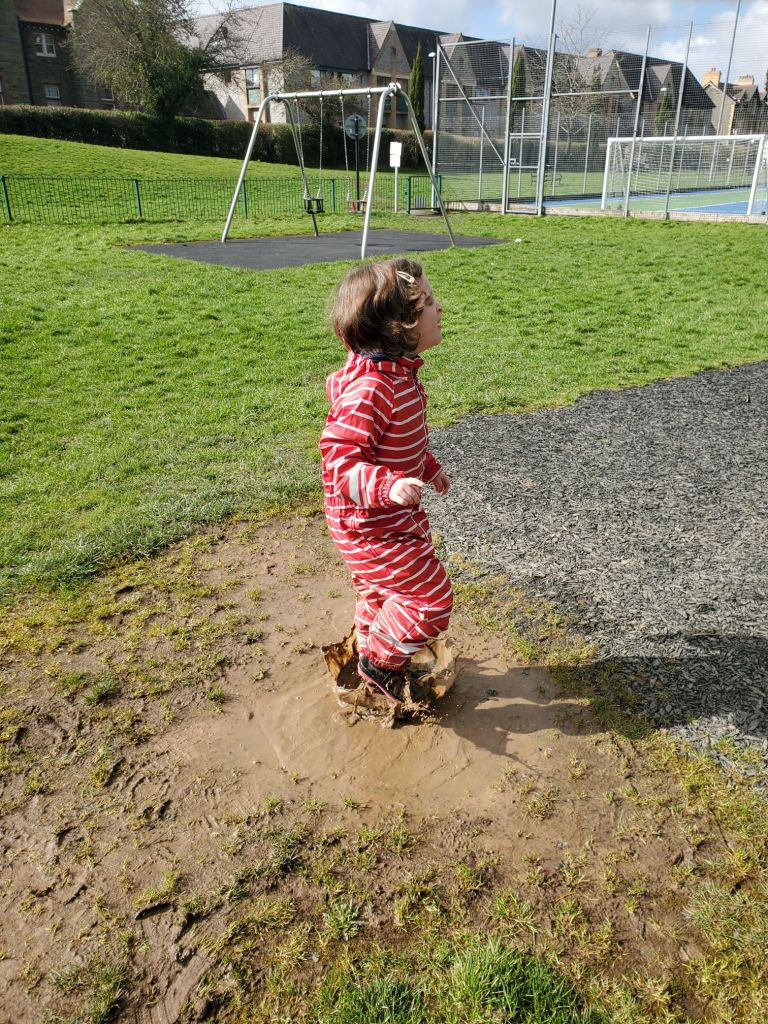
Yet for all the challenging aspects of Bethany’s Autism, there is also beauty in it. She is completely and utterly her own person, whether dressed as a princess or splashing in puddles with wild abandon. She doesn’t know a stranger and she will sing with all her heart (although you may not understand the words).
You may ask why we bothered to get a diagnosis if we already knew the truth in our hearts. Why label our child? Truth be told, our child would soon be labelled whether we got her diagnosed or not: Naughty, troublemaker, slow, dumb, stupid – these are all labels that are often given to undiagnosed children with special needs. If we remember that all behaviour is communication, and communication reveals a need, then we can see that oftentimes, the children who act up the most are just showing that they need help.
It was obvious to us that Bethany needed help, and as a family we were struggling to cope. We needed help. Getting a diagnosis would open the door to receiving support both for her and for us as parents. It would also provide a more positive label than the ones I previously mentioned.
Diagnosis provided me with opportunities to access training courses that would help us to understand our child and know how better to support her. Diagnosis paved the way for us getting her a Statement of SEN (Special Educational Needs) and ultimately a place in Special School. As a non-verbal child, Bethany would not cope in mainstream school. Since being in Special School, she has thrived. Her vocabulary is steadily increasing and whilst she cannot hold a proper conversation, she can make her needs known and understand more of what we say.
It has often been said that Autism is a reason, not an excuse. With her diagnosis, we have a reason for why Bethany is the way she is. Knowing that reason, we can make reasonable accommodations to support her and we can research strategies to help her to achieve her full potential in life.
To sum up, pursuing a diagnosis is about getting your child labelled correctly, and ultimately it is so you can access the appropriate support.



 Memories, Musings, and Meditations