The day Bethany was diagnosed with Autistic Spectrum Disorder was a day of great relief. It was a day of validation, to know that professionals saw her need. They saw our difficulties as a family, and they agreed with us. To hear those words after 18 months of being told not to worry and “she’ll catch up,” was strangely quite healing.
I already knew in my heart that Bethany was autistic. Her behaviour made it all too clear to me as her primary caregiver. My husband and I were frequently tearing our hair out, metaphorically speaking, as we tried to manage her challenging behaviour and lack of communication skills, especially while out and about in the community.
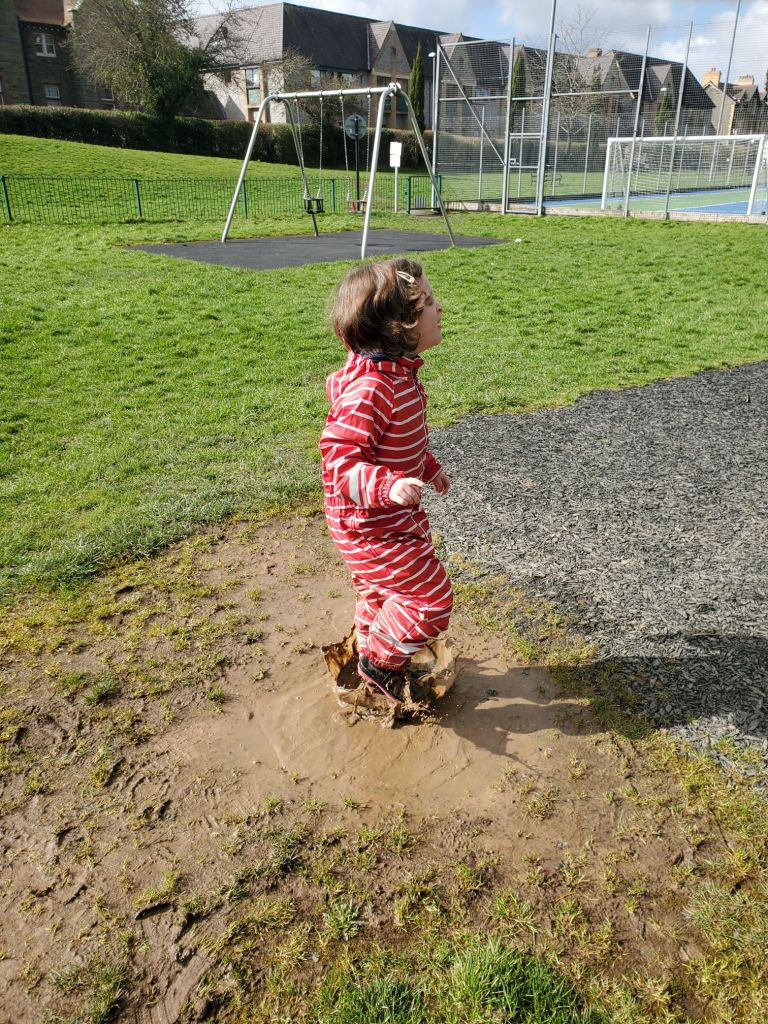
Yet for all the challenging aspects of Bethany’s Autism, there is also beauty in it. She is completely and utterly her own person, whether dressed as a princess or splashing in puddles with wild abandon. She doesn’t know a stranger and she will sing with all her heart (although you may not understand the words).
You may ask why we bothered to get a diagnosis if we already knew the truth in our hearts. Why label our child? Truth be told, our child would soon be labelled whether we got her diagnosed or not: Naughty, troublemaker, slow, dumb, stupid – these are all labels that are often given to undiagnosed children with special needs. If we remember that all behaviour is communication, and communication reveals a need, then we can see that oftentimes, the children who act up the most are just showing that they need help.
It was obvious to us that Bethany needed help, and as a family we were struggling to cope. We needed help. Getting a diagnosis would open the door to receiving support both for her and for us as parents. It would also provide a more positive label than the ones I previously mentioned.
Diagnosis provided me with opportunities to access training courses that would help us to understand our child and know how better to support her. Diagnosis paved the way for us getting her a Statement of SEN (Special Educational Needs) and ultimately a place in Special School. As a non-verbal child, Bethany would not cope in mainstream school. Since being in Special School, she has thrived. Her vocabulary is steadily increasing and whilst she cannot hold a proper conversation, she can make her needs known and understand more of what we say.
It has often been said that Autism is a reason, not an excuse. With her diagnosis, we have a reason for why Bethany is the way she is. Knowing that reason, we can make reasonable accommodations to support her and we can research strategies to help her to achieve her full potential in life.
To sum up, pursuing a diagnosis is about getting your child labelled correctly, and ultimately it is so you can access the appropriate support.

 Memories, Musings, and Meditations